Sunday, March 1, 2015

Unit 8 Blog

Freshwater Resource Discussion

Aquifers-
  • Ecological benefits
    • 1) Provides water in wells for animals 
    • 2) It is stored underground and is a good source of water to irrigate crops
  • Economic benefits
    • 1)Does not have to be desalinated unless there is a saltwater intrusion
    • 2) Aquifers are a reliable way to get water
  • Human impact-  Humans use aquifers to irrigate crops and if the pumping of water from the aquifer is more than the amount of water in the recharge then a cone of depression can form and dry up nearby wells.
Lakes
  • Ecological benefits
    • 1)Fertile Soil is common around 
    • 2) Regulate the water flow of a river
  • Economic benefits
    • 1) Lakes attract activities like boating, fishing, and other activities that contribute to the economy
    • 2) Artificial lakes are used for hydro-electric power generation
  • Human impact- The use of fertilizers can cause eutrophication in Lakes and affect the level of productivity in the lake.
Rivers
  • Ecological benefits
    • 1) Home for many animals like fishes and turtles
    • 2) The rivers fertilize soil in the area
  • Economic benefits
    • 1) Transport. Like in boats or ships if it is huge river
    • 2) Usually people and communities settle near rivers thus making them dependant of the river and creating a lot of activities around the river that create jobs and help the economy. 
  • Human impact- Overusing rivers or living near rivers can contaminate or drain them. The thames river in London, England was once a beautiful river, but when the industrial revolution came about it got nasty with pollution. 
Wetlands
  • Ecological benefits
    • 1)Natural filter of water
    • 2) Regulate water distribution
  • Economic benefits
    • 1) Wetlands reduce the impacts of hurricanes thus making said natural disasters less costly
    • 2) Benefit the growth of rice and helps the rice industry
  • Human impact- Humans drain wetlands and harm the wetland ecosystem in doing so. 
Water Diversion Discussion

Hoover Dam
  • Location- The Hoover Dam is located in the Black Canyon of the Colorado River and impounds Lake Mead to make electricity 
  • Ecological
    • Benefits
      • The Hoover Dam controls floods and can even prevent them. 
    • Costs
      • The construction of the Dam hurt the ecosystem that took place in the Colorado River. The change of watershed, the erosion of river banks, and the pollution of increased vehicles have hurt said ecosystem. 
  • Economic
    • Benefits
      • Produces electricity
    • Costs
      • It put the Hoover administration into debt because the cost of the dam was extremely expensive.
Pont du Gard
  • Location- The Pont du Gard crosses the Gardon River in Remoulins, in southern France. The PdG carries water from Uzes and diverts it to Nimes. 
  • Ecological
    • Benefits
      • Got water to the people of Rome and maintained the Roman Empire and helped it expand. Got fresh and clean water from streams and springs all the way to Rome!
    • Costs
      • The fall of the Roman empire was caused partly because of the great aqueducts. Enemies would poison the water which would not only harm the animals, but it would also kill the Romans leading to their fall.
  • Economic
    • Benefits
      • In its time of use the PdG would transport water to the citizens of Nimes making water cheaper. It is now used for tourist purposes in Rome.
    • Costs
      • The Pont du Gard was costly to build and even more to maintain and in the 10th century the aqueduct became clogged with mineral deposits. The aqueduct also took 15 years to be finished.
Three Gorges Dam
  • Location- The Three Gorges Dam is located in the Yangtze River in China. 
  • Ecological
    • Benefits
      • The TGD has many purposes and one of them is flood control. 
    • Costs
      • The fish have been heavily affected by the dam. They can't cross the river anymore because of the dam and their habitats and lifestyle have and will continue to be affected
  • Economic
    • Benefits
      • The TGD produces electricity for the area around it and it produces energy for nine provinces and two cities. 
    • Costs
      • Erosions in the reservoir have increased the number of landslides in the area. This is costly for the government. 
Water Quality Discussion

Nitrate- In Parr Park we tested the water for nitrate. Nitrate in water can be bad for the consumers health if there is too much of it in the water. At small amounts nitrate isn't bad, but if the water has too much nitrate then that water is unsafe to drink. Nitrate can get into the water in several ways. It can come from fertilizer runoff, leaking from septic tanks, sewage, and erosion of natural deposits. 

Phosphate- Phosphate is not bad for the water but in excess it can lead to algal blooms and thus intoxicate the water. The test for phosphate is to see if the water is still safe for the wildlife or from whoever uses it. Phosphate is naturally in streams but can also come from sewage or fertilizer. 

Temperature- The temperature of the water determines what type of animals can live in it. The temperature of the water is also an indicator of the oxygen levels. If it is warm then it can hold less oxygen. 

Fecal Coliform- Fecal Coliform is a test run to see if the water is intoxicated with fecal matter. If it is then that water is unsafe to drink and can be even hazardous to consume. FC in water can also lead to an increase in oxygen demand for the water. FC comes from human and animal digestive systems. 

Ph- Acidity or baseness of the water. HIgh acidity is horrible for wildlife. The Ph levels normally range from 6.5-8.5.

Biological Indicator Species- Stoneflies. If there are a lot of stoneflies in the area then that tells scientists that the water is high in its oxygen levels. If the temperature is cold then the oxygen levels are high and can lead to an increase in stoneflies.

Water Conservation Discussion

Agriculture
  • 1)Use drought tolerant crops and seeds so that you don't need to water them whenever there are droughts
  • 2)Harvest rainwater and use that instead of regular irrigation techniques. 
Industry 
  • 1)Water-less fracking. A lot of times companies frack for oil and to do that they need water. Water-less fracking technology, albeit expensive, can help preserve water. 
  • 2)Don't use nuclear reactors. Nuclear reactors use up a lot of water and water vapor that wastes a lot of water.
Household
  • 1)Use low flush toilets to help preserve water instead of wasting clean water on flushing a dump. 
  • 2)Be more efficient in the use of sprinklers and gardening techniques in order to cut down on water waste. 
BIG FOUR

Human Impact- Humans contribute a lot to the water world and pollution. In the assignments I did alongside my group I learned that the construction of dams, aqueducts, dikes, etc are all ways that human beings have diverted water for their benefit. The Romans did it in the olden days with aqueducts and now we have huge dams that everybody cares about. I do give a dam(hahaha just a joke Mrs. Kays). Sadly we also impact the environment in a negative manner. Humans have polluted the water and overused it and when we do use it we use it incorrectly. There are more efficient ways to flush to the toilet or to frack for oil. In the Salton Sea project I learned that the use of water from the sea to irrigate can dry out the sea and hurt the whole ecosystem around, irrigation that is cause by humans. 

Environmental Impact- The environment is greatly impacted as well in this. Water is one of the most important parts of the environment. It is essential for farming and for animal life and the pollution of water can really harm the environment. Dams control floods and help the environment but they also prevent water from crossing to another side and harm the wildlife there or prevent fish from getting to their breeding grounds. 

Economic Impact- Hydropower provided by dams helps the economy by providing cheaper energy. Aqueducts in the olden days made clean water cheaper and easier to acquire. Energy is cheaper, but the water can also get polluted in industry when trying to make items more economically viable. In agriculture the government subsidizes the farmers to help them grow crops and even put themselves into debt with the hoover dam. Oil spills are massively harmful and very expensive to fix and recover from. 

Government Legislation- Humans are destroying mother earth. That is a fact. Luckily there are laws to help keep her destruction to minimum. There is the clean water act of 1972 that supports the protection and propagation of fish, wildlife and shellfish and recreation in and on the the water. It is enforced by the EPA. The safe drinking water act of 74, 86, and 96 set standards for what safe water for drinking should be in the USA. These laws have been put into place to not only help prevent mother earths inevitable destruction but to help human beings health as well. 


Tuesday, February 3, 2015

Unit 7-Land Management


Forestry Discussion-

Benefit of forest fire- The main benefit of using prescribed burning as a technique to help the ecosystem is that the fire itself liberates nutrients tied up in dead biomass and also allows for new species to develop there that were not there before. 


Cost of prescribed burning or a negative- A prescribed burn can easily get out of control and become a real danger and it also contributes to an increase in carbon dioxide because of the vast amount of burning that occurs.

  • Economic impact- Can be very costly if not done correctly. 
  • Ecological impact- Increase in CO2, messes up soil, alters plant community structure
  • Human impact- If a prescribed fire gets out of control then people can die
Global Nutrition Discussion-

The production of meat is more costly at a global level because of the use of fossil fuels and other energy. As it says in the powerpoint, back then during hunting/gathering the energy input was not that great since it was mainly human input. Human input is not as costly as fossil fuels which can never be used again. The energy subsidy of feedlot beef is above 10, but the energy subsidy of large-scale corn is 0.5! Meat production also requires more land as well. According to Peta.com, raising animals for food now uses up an astounding 30% of the Earth's land mass. Peta also says that
"It takes more than 11 times as much fossil fuel to make one calorie from animal protein as it does to make one calorie from plant protein"
In terms of resources needed the production of meat is also largely inefficient. Yet again PETA pulling out the facts by saying 
It takes up to 13 pounds of grain to produce just 1 pound of meat, and even fish on fish farms must be fed up to 5 pounds of wild-caught fish to produce 1 pound of farmed fish flesh
and that
more than 70 percent of the grain and cereals that we grow in this country are fed to farmed animals. 
It is also more costly water-wise. It takes up more water to clean out the filth, to feed the load of animals, and to transport them than to simply grow crops.
It takes more than 2,400 gallons of water to produce 1 pound of meat.
The overall environmental impact of meat production is disgustingly huge. It puts a strain on the supply of clean water available, it cuts down on the amount of fossil fuels left, and takes up a lot of arable land. It also causes a lot pollution "According to the Environmental Protection Agency (EPA), the runoff from factory farms pollutes our waterways more than all other industrial sources combined."
Genetic Engineering Discussion-

GMOs or genetically modified organisms are a ruse. A tomato is not really as big as the ones you buy are, actually the one that you buy is a modified tomato and since it is modified it is now redder and bigger and juicier and maybe even healthier. 

Some benefits of GMOs are

  1. Greater amount of that organism that are produced
  2. Quality is greater
  3. Reduction in pesticide use
  4. Reduction in world hunger
  5. Bigger profits
Some costs of GMOs are
  1. Safety of humans
  2. Effect on biodiversi
  3. Regulation or lack thereof 
GMOs increase profit of the companies and help produce more in less time. GMOs also have a lesser need for pesticides and greater resistance to pests. This impacts the economy in a healthy manner by increasing profits and it also help the environment by not having to use pesticides. I don't see a downside to the increase in profits because there really is none. The downside to the resistance in pests is that the pesticide companies are now not needed so that is a downside for them. The environmental impact of a resistance to insects is good in that now the pests don't have to die. There is no downside to having a greater yield or reduction in world hunger. Those both impact the economy by mass producing the products and improving the economy. 
Non GM crops are more expensive to buy and to produce, they use pesticides, and they expire a lot faster than regular crops. 
Sustainable Agriculture Discussion-

No till agriculture- This method of farming helps prevent and even stop soil degradation by leaving crop residues there and not tilling the land after harvest. By not tilling the land the soil is less ably disturbed by outside forces that cause erosion. It is also more more efficient with human labor and even economically. Since one does not have to till the land it does not use up fuel that the machines used consume or energy of other fossil fuels thus an increase in profits, albeit minimal sometimes. 

Contour plowing- Harvesting and plowing parallel to the land to prevent erosion. By plowing and harvesting along the contour lines soil erosion is prevented because, in most cases, it disrupts the heavy water run off that erodes the land and degrades the soil. It also helps by preserving the topsoil. Furthermore there is a decreased need for the use of fertilizer and artificial irrigation making it economically efficient as well

Pest Management Discussion-

Integrated Pest Management- Using various farming techniques to mitigate and cut down on the use of pesticides.

Crop rotation- In this method the farmer rotates the crop every season to help his land and to reduce the amount of pests. In rotating the crops you give the crops better soil and nutrient to help it better shield itself of pests. If a farmer continues to use the same spot of land then he can exhaust that land and make it easier for pests to attack it. It gives time for the nutrients to grow back into the soil.

Intercropping- In this method two or more crop species are planted in the same field at the same time.
 "Intercropping works by attracting pests away from their host plant. Planting a variety of plant species on a field increases the distance between plants of the same species, making it harder for pests to target their main crop."

Both methods are more cost effective. Using pesticides is expensive and these two methods don't require pesticide use.

Friday, December 12, 2014

Unit 6 Blog

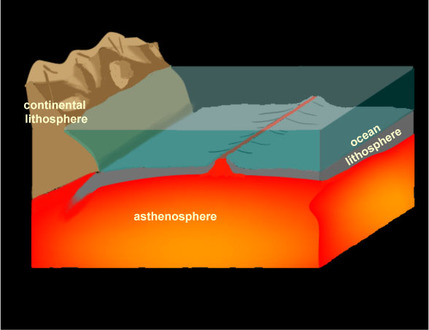
Asthenosphere - Part of mantle under the lithosphere. Much hotter and less dense as well. 
Lithosphere- part of crust and upper mantle
Plate Tectonics- plates that move underneath the earth's crust
Tectonic Cycle- cycle of the movement of plates
Divergent Plate Boundaries- where plates are coming apart
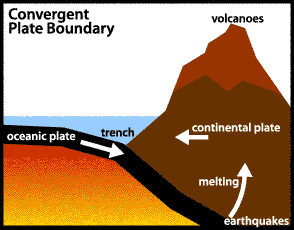
Convergent Plate Boundaries- where plates come together
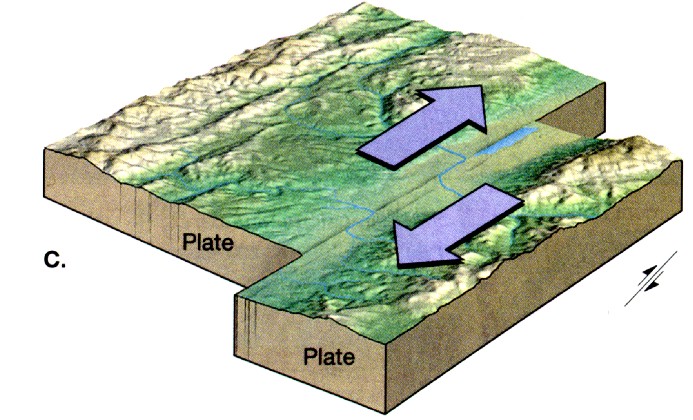
Transform Fault Boundary-where two plates slide past each other in a horizontal motion
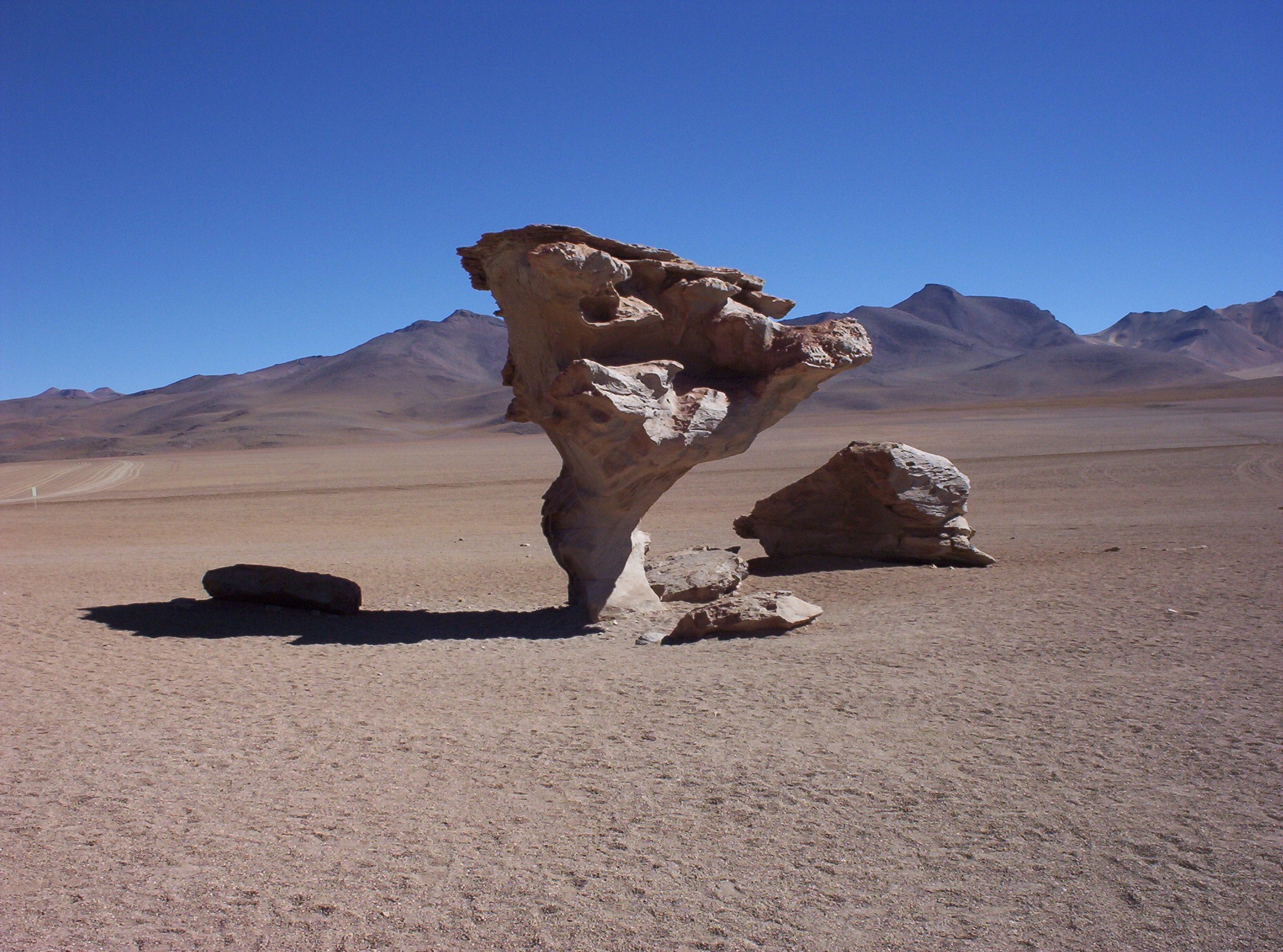
Physical Weathering- weathering caused by physical actions such as a rock breaking in half by consequence of a physical action
Chemical Weathering- When chemicals are the ones that weather an object. Not a physical action
Erosion- weathering by nature
Deposition- when something accumulates into a landmass 

Cation Exchange Capacity- capacity of soil to hold exchangeable cations
Base Saturation- basically the number of basic cations that occupy the CES divided by the CEC
Soil Degradation- degradation of soil caused by misuse
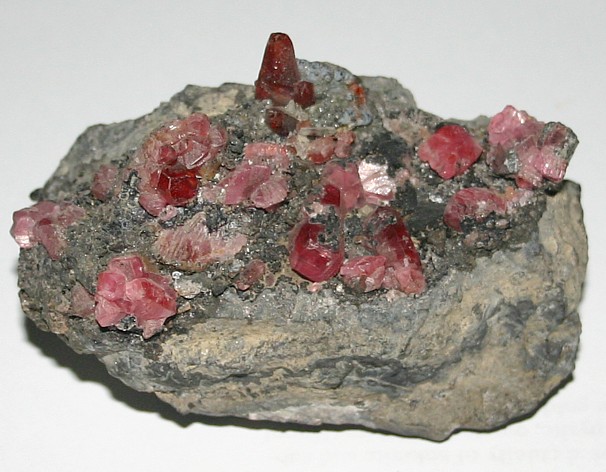
Ores- mineral which has value

Big Picture Reflection-
Human Impact- Humans impact the earth systems and resources in many ways. We, as humans, mine, farm, and impact the environment by simply just being here. Walking the same path to school weathers down the grass there making it a marked path. By mining we harm the infrastructure of the earth, by farming we harm the soil if done incorrectly and even deforestation harms the earths systems. The earth also impacts us. Plate tectonics have been the cause for many ungrateful accidents that have led to the deaths and injuries of many people and even countries. Katrina devastated all of New Orleans and it was because of a hurricane caused by movements of plates undersea

Environmental Impact- This is the environment... A fault zone can cause an earthquake and impact the environment in which it happened. Same with all natural disasters cause by tectonic plates and their movements. Soil impacts the environment as well. If the soil has a different texture to the one an animal or tree lives in then that animal or plant can't live there thus making that area uninhabitable

Economic Impact- Natural disasters caused by shifts of the tectonic plates is a very expensive disaster to have happen to someone. Sometimes buildings are built in order to be able to take in the impact of an earthquake and it is more expensive material as well. Ores are profitable sources and have many valuable minerals Agriculture depends on the soil and if the soil isn't good that year because of misuse then it impacts the economy as well. If the the government has to subsidize the farmers then it loses more money. 

Government Legislation- The Surface Mining Control and Reclamation Act (1977) was made to ensure proper protection and measures are taken when mining. 
"Emergency Planning and Community Right-to-Know Act (1986): Requires companies to disclose information about toxic chemicals they release into the air and water and dispose of on land."- this act also prevents or informs people of the conditions of soil in an area and even the water there. 
There is also a government agency for Emergency management as well. 

Sunday, November 30, 2014

Unit 5 Blog- The Human Population

Vocabulary-

CBR- cbr is the amount of people born for every 1,000 people already alive in a population


CDR- Crude death rate is the amount of deaths per 1,000 in a population


TFR- total fertility rate is the average number of people a woman gives birth to over the course of her lifetime


Replacement level fertility- Replacement fertility is the total fertility rate at which women would have only enough children to replace themselves and their partner.

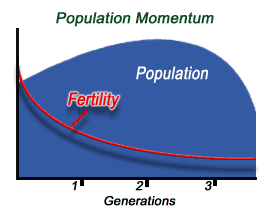
Population Momentum- the growth that occurs even if the replacement level of fertility dropped to anything below 2.1 because the momentum is such that it would continue to grow even if there were less children being born to replace the dead. 
Net Migration rate- the number of people that leave and enter the country per 1,000 people 
Family Planning- the methods used to help plan for a family such as contraception meds and vasectomies 
Affluence- the wealth of the people in a country
IPAT equation- the impact of a countries people on the environment depends on the countries population, affluence, and the technology available
GDP- gross domestic product is the value of everything produced domestically at the end of the year
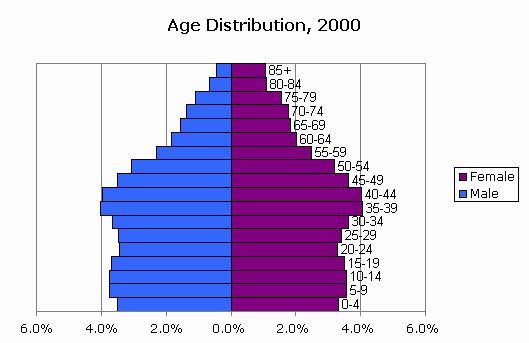
Population pyramid high growth rate-
Stable growth-
Declining growth- 
MAKING CONNECTIONS-
The environmental impact is based on a countries affluence, population, and the technology available in that country. 
Stage 1- There is only one country in stage one, Lesotho, and it has almost no impact on the environment because it has a small population, very little affluence, and very little technology available to it. It has a very high death and birth rate that prevents it from growing in population terms and the lack of technology keeps them from growing thus keeping them as a farming country in which mainly children are born to help their parents.
Stage 2- As a country transitions to stage two the death rate decreases because of an increase in technology but the country continues to struggle in terms of affluence although the population does grow. Although India, a phase two country, has a relatively high impact on the environment, it is an exception because most phase two countries do not have a high impact. 
Stage 3- As a country begins to transition into a phase three country, it starts to impact the environment even more because more technology becomes available to such a large population. The CBR starts to drop because with better family planning and more health care that helps keep the first few children alive hinders the need for more children. Countries such as a the USA and Canada, both phase three, have a large impact on the environment because of the use of factories and technology and cars harms the environment. 
Stage 4- A country transitioning to stage four has a lower impact on the environment since its population is less than that of a stage three country, but it still impacts the environment more than a stage 2 or a stage 1 country. More money usually circulates in a stage 4 country and people are more affluent than before. Technology is also very high in a stage 4 country as is health care and family planning. 

In this article the journalist reports that because of doctor's not following the guidelines, there have now been 11 women dead and 62 injured in the sterilization process. These deaths are caused by lack of basic hygiene by the doctors and for their use of infected tools on the women during the surgery. The women who decide to undergo sterilization are often paid a laughable amount of 23 dollars or are forced to do so or coerced into being sterilized. One of the doctors, Dr. R K Gupta, performed 83 surgeries in 6 hours! The director of the Reproductive Rights Initiative at the Human Rights Law Network in New Delhi, Kerry McBroom, said that the clinics in which the surgeries are performed are of terrible conditions. India has problems with its population and has to find ways to control it so that they don't reach carrying capacity and can maintain a healthy environment for most people, but as Kerry says, a lot of things can go wrong. 

Kerry said:
"You might find that there is no electricity, there is no running water, there is not enough staff in these facilities. They won't have things like blood, in case someone hemorrhages. ... they won't have enough gloves or aprons,". 
"Women will go to the facility wearing their clothing and remain in that facility until they go. So there is no attention paid to basic prevention."
 With such little health precautions being taken there will obviously be infections and maybe even deaths.

Pro of sterilization- Less children born to help curb the growth of one of the fastest nations in terms of population, the women who participate get payed by the government.

Cons- Poor lack of hygiene can lead to infection or deaths, don't get paid enough to do it, often forced, you can't have anymore children, infringement upon basic human rights.

Big Picture Reflection-

Human Impact- The human population obviously is impacted by humans, but humans impact it in many different ways. In my current event I discuss how human caused overpopulation can lead to making decisions such as government endorsed sterilization. Also humans impact and shape a country and thus decide its fate when it is categorized as a stage 2, 3, or 4 country in the demographic transition model. If the people in the country decide to have 40 children each, an exaggeration but you get the point, then that country will most likely be a stage 2 country because if each mother is having 40 children then that means that the children help the family economically by gaining money working and that out of those 40 children maybe 10 will survive to adulthood because of poor health care and lack of family planning. If countries have too many people then they could reach carrying capacity, this would be cause by humans overpopulating the country in the first place.

Environmental Impact- In the video it says that humans thrive on less than 17% of the earths surface so the impact that we do have on that 17% is massive. In the article the environment actually is the one that impacts us, or in this case the people of India. Because people litter and harm their environment then there is lack of of proper cleaning supplies that then cause the infections that harm the women that get sterilized. Also if there are too many people then that environment might reach carrying capacity and people would be forced to look for different ways to supply their families with food or water. Rivers become murky, shallow water and the land becomes impossible to farm on. The transition between the demographic transition model also shapes the environment in which we live. Brazil was once a country covered with forests and wildlife, now humans have urbanized so much that about 70% of the original Amazon rain forest now remain. The IPAT equation depends on the affluence of the country and their level of technology as well. This can apply to environmental impact or the economic impact.

Economic Impact- The human population depends on the economy. We are at the mercy of the economy. In the 1920s and '30s when the depressions happened a lot of humans lost jobs here in the USA and were forced to make drastic changes to their living situations. People lived on the streets and even migrated to other places in the USA were the depression did not affect them as much. In the country of India the government used and still uses money as an incentive to get a vasectomy or get sterilized. Albeit, the money is around 30 dollars, but still it does impact the government's economy that it has to spend on sterilization when it could be spent creating jobs for the children that could be born. Urbanization and infrastructure because of the growing human population have to resume growing and to be spent on by the people of that country, thus causing taxes to increase and making people mad. By Glade rd it already too overpopulated with cars at peak hours but because the people that live there don't want to pay to expand the road then we are left with 30 minute traffic jambs because of a stop sign or a round-about that people don't know how to go through. The IPAT equation depends on the affluence of the country and their level of technology as well. This can apply to environmental impact or the economic impact.

Government Legislation-  There is a lot of government and international legislation even when it comes to the human population. International law mandates that widespread or forced sterilization is a crime against humanity under the Rome Statute of 1998. This law makes it so that in India the government has to pay you to get sterilized and is not forced but it is highly recommended. In the USA there are no laws to control human population at all and we should be thankful for that. In countries such as Germany, Japan, Taiwan, Australia and Russia pay people to have children and most of these have declining populations and are stage four countries.

Monday, November 3, 2014

Vocabulary

Species Richness- the quantity of species in an area


Species Evenness- the evenness in quantity of different species in an area


Microevolution- small change within single species 


Macroevolution- big change in a species


Evolution by Natural Selection- You adapt to survive 


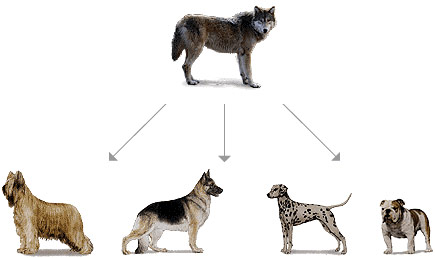
Evolution by Artificial Selection- made artificially to achieve desired traits


Allopatric Speciation- when one species splits and evolve differently and can no longer mate


Sympatric Speciation- when a new species form after having evolved from the same ancestral species while living in the same area


Genetically Modified Organisms- organism that is altered genetically. Like huge tomatoes because people don't want small tomatoes 


Fundamental Niche- where a species CAN live without regard for predators


Exponential Growth Model- estimates populations future size after some time based on the current growth rate and the number of organisms that can actually mate or have offspring 


Logistic Growth Model- population that grows until it cannot logically continue to grow because it has reached the carrying capacity of their environment


Carrying Capacity- number of organisms that can survive at the same time in an environment


Keystone Species- MVS or most valuable species in an environment. A lot species depend on that one species

Current Event-
What is a biodiversity hotspot and why are they important? A BH has many species that can only live there(endemic species) and are an area that is under threat from humans. It also has a lot of different species. They are important because they contain many unique species that can only live there and must conserved and must be kept safe from human threats.

Where is your hotspot located and what type of ecosystem is present there? The Tropical Andes is an area with many tropical rain forests
An endemic species is a species that live in specific locations around the world and nowhere else. Mainly isolated

Endemic plant- Andean bromeliad. Known as the queen of the andes. Only found in 3200-4800m of elevation. Can grow up to 10 meters!

Endemic animal- Vicuña. Live in the high area of the Andes and are a relative of the llama.
Human induced reasons and/or natural reasons for why biodiversity is decreasing- Agriculture, deforestation, dams, and road building are the most significant threats. At higher altitudes  seasonal burning, grazing, agriculture, mining, and fuelwood collection. Also cultivation of opium. Oil exploration and mining also fuel the decrease in biodiversity. 

Efforts being done to to protect the area- The people of the Andes are trying to reduce the effect the growing infrastructure has on the species of the andes. Laws that prohibit poaching, settlement and illegal logging have been put in place. Protecting certain areas of the Andes to keep the ecosystems in tact. 

Pick-A-Side
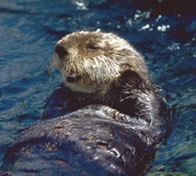
If there was a sea with fish, kelp, and sea urchins but no sea otters than the fish in that area would become extinct. The sea-otters, a keystone species, eat the sea urchins. By eating the sea urchins they help maintain a species evenness because if there are too many sea urchins then there aren't enough kelp beds for the fish to have their little fishies. Thus no sea otters means there could be a mass extinction of that fish species. Species richness would decrease as well because there would be no fish at all. No fish in that ecosystem could also affect the predators of the fish such as bears, eagles, or if in the sea then dolphins or whales would be without fish to eat. Without fish to eat the whale or dolphin population could also decrease. Also without sea otters there would be too many sea urchins and the sea urchin ecosystem could reach its level of carrying capacity.

Human Impact- Humans have negatively impacted the environment. The Tropical Andes became a hotspot because humans wanted to expand into that zone thus destroying certain habitats of some rare species. Humans can also be the reason for many changes in some species such as allopatric speciation. A man made barrier may split a species and prevent it from mating and when it finally gets reunited it has evolved and can no longer mate with its former species.Humans are also responsible for genetically modified foods and are the reason why we can enjoy seasonal fruits in all four seasons, such as strawberries and oranges. In our lab we impact our fish by feeding him every class period. 

Environmental Impact- There are many environmental impacts that shape the evolution of biodiversity. Keystone species are developed that make a community dependent on them, even if nobody notices until that species starts becoming extinct and things start changing because that keystone species isn't there anymore. The climate and altitude of the Tropical Andes region is what allows many species of plants and animals to survive there and only there. The environment is also a reason for evolution. Animals have to evolve if the environment because if they don't then they don''t survive. Survival of the fittest and the animals that can adapt the fastest survive the most. The environment is also responsible for the amount of species that can live in an environment aka the carrying capacity. If there are 100 potatoes and 500 lions and each lion needs one potato to survive then sadly 400 lions will die because only a max of 100 lions could survive in such a potatoless environment. Our lab is not affected by the environment outside because both the fish and the hermit crab are in its own ecosystem. 

Economic Impact- The disappearance of a keystone species could impact the economy negatively. If sea otters disappeared then so would fish and the fishermen would have no fish and would go into a fishless recession. GMO benefit the economy though, because these organisms that are genetically modified can be grown without relying on any outside variables and would not be affected if anything changed, except if there was a shortage of the organism in the first place. If there is a shortage then the prices of the organism(food) would go up and it would cause problems in our economy. Farmers would also be impacted negatively if there was a shortage of food in their farms. In the Tropical Andes the protection of certain zones of it could stunt the growth of the infrastructure of that country as well. 

Government Legislation- In our lab there is no government legislation. In the Tropical Andes there is. There are many efforts being made by the government to protect this biodiversity hotspot. Government has passed laws to prohibit settling, poaching, and illegal logging. Endemic species also have to be protected. Government legislation has also harmed the biodiversity hotspot by allowing mining and oil exploration and road building and other threats to occur in the tropical andes before making any steps towards stopping them. The government has also passed laws concerning GMOs.Laws are made to protect the people from unsafe foods that are GMOs. The FDA is in charge of this.