 Vocabulary-
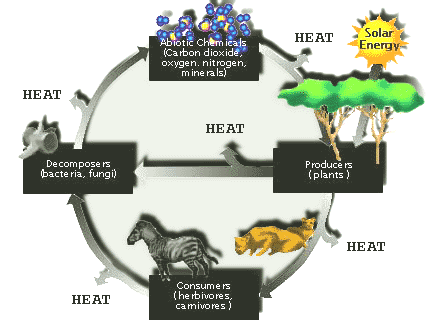
 Ecosystem- A community of abiotic and biotic organisms that interact and form complex systems of energy flow and cycles.
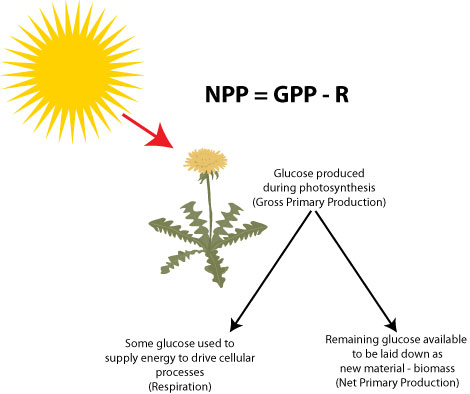 Gross primary Productivity- rate at which energy is captured during photosynthesis

 Net Primary Productivity- amount of energy captured for photosynthesis minus the amount of energy used by the plants for respiration
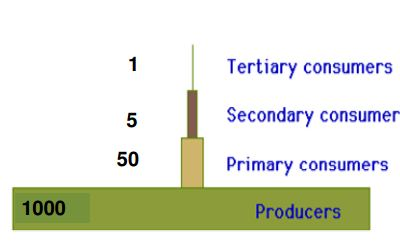 Biomass- all mass in an area of biotic organisms added together
Standing Crop- biomass in an ecosystem at a specific moment
Ecological Efficiency- energy transferred from one level to another(10%)
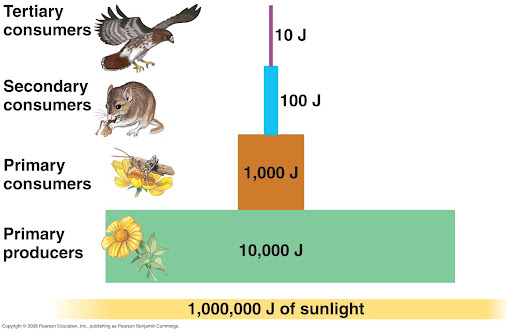
 Trophic Pyramid- picture of the energy at trophic level and the transfer of it
 Biogeochemical Cycles- matter moves around ecosystems. This movement involves BIO(geochemical)LOGICAL, (bio)GEO(chemical)LOGICAL, and (biogeo)CHEMICAL processes.


Limiting Nutrient- a nutrient that is needed to grow. If you don't have it your growth is limited.
Leaching- water carries minerals and/or nutrients through the soil
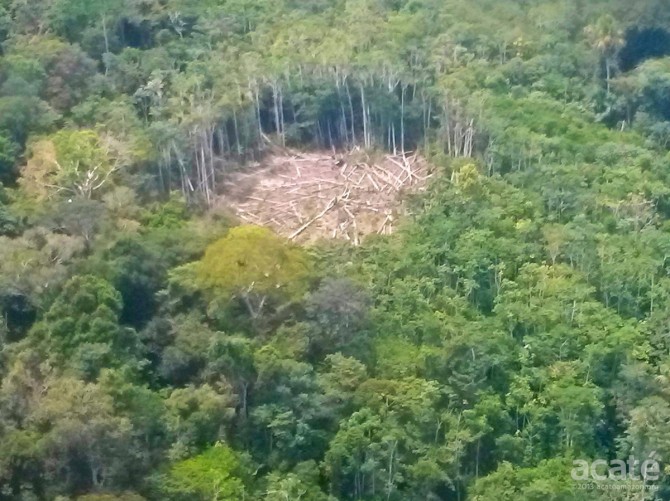
 Disturbance- an outside event that affects an ecosystem
Resistance- amount of disturbance an ecosystem can take
Resilience- time it takes an ecosystem to return to normality after a disturabnce
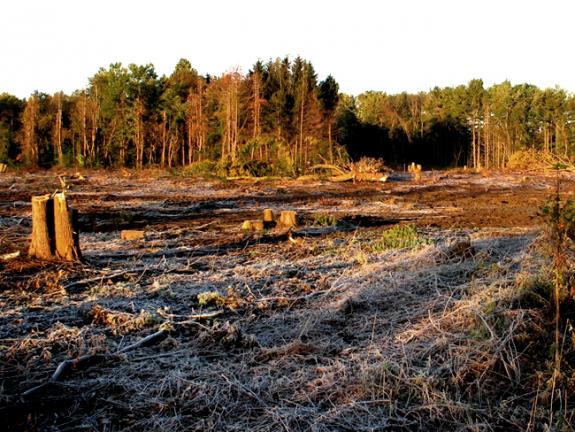
 Instrumental Value- value of something because of its benefits
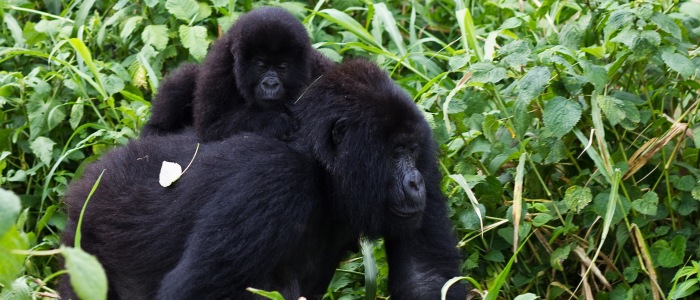 Intrinsic Value- independent value of an species. Doesn't matter how it benefits us or not.
Current Events-
How saving West African forests might have prevented the Ebola epidemic
Summary- With the sudden ebola outbreak many people have been wondering what could have caused it. In this article, Ginsburg, theorizes that the deforestation of Liberia is the main cause. Since the fruit bats are losing their habitats they have to find new places to eat and live. Patient Zero in the ebola outbreak is said to be a two year old kid who ate a fruit that was contaminated by a fruit bat. Ginsburg says that "The bottom line is that there is no public health without environmental health." He is right. In order to protect the people we have to protect the environment. Maybe if there was more preservation of the forests in West Africa this outbreak might not have happened.
Environmental Quote-
I think that this statement is true to an extent. Bees are in-fact essential to the human race. They pollinate the crops, the crops grow, the crops get harvested and then the crops get distributed. If bees did not exist then there would be no pollination to help the crops grow. Yes, not having bees would greatly harm not only the USA, but the whole of the human race as well. Albeit, our decline may take longer than four years like Einstein said, but nonetheless there will be a decline were it to happen. According to the American Beekeeper Federation "Honey bees contribute over $14 billion to the value of U.S. crop production." If the numbers provided by the USDA are correct then 14 billion is less than 10% of the annual value of US crop production. 10% might not be that much in the grand scheme of things, but it sure is a lot. At the time Einstein said this it may have been true for the lack of technology. Now that we have more technology scientists are finding ways to potentially replace bees. Robo-Bees. Bees have instrumental value, but humans could survive without them. Their disappearance might affect other species and ecosystems like the human race, but we can bounce back from it with technology.
Big Picture-
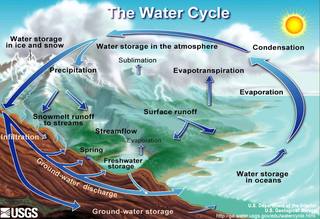
Human Impact- Humans can have good or bad benefits on ecosystems. Sadly, most of the time we are a disturbance, whether it be causing wildfires, oil spills, or cutting down forests or leaving a huge carbon footprint that slowly destroys this planet. In the current event I summarized, humans are assumed to have caused the ebola outbreak by form of deforestation, thus forcing bats to search for a different habitat. Humans also impact the hydrologic cycle by harvesting trees, which reduces evapotranspiration by reducing plant biomass, or paving over land surfaces which reduces the amount of percolation there thus increasing runoff and evaporation. The carbon cycle is also affected by humans. Human extraction of fossil fuels, the combustion of fossil fuels by humans, tree harvesting, and human caused fires in forests are examples of how humans impact the carbon cycle. With more carbon in the air and not enough plants to turn carbon into oxygen or sugars. The phosphorous cycle is affected by eutrophication, which cause algae to grow faster and the die. The death of the algae intakes a lot of oxygen which deprives the rest of the aquatic system of oxygen. The nitrogen cycle is also affected by humans and their use of fertilizers. Increased atmospheric nitrogen concentrations can be deposited into areas where nitrogen is a limiting nutrient. It can affect species in ecosystems.
Environmental Impact- Ecosystems are part of the environment and are affected in similar ways. When an environment is harmed so is an ecosystem. If a forest is razed, if a pavement is built, if a place is urbanized, then an ecosystem is hurt because its surrounding environment changes and cannot sustain it anymore. Any disturbance can affect an ecosystem, no matter how high its resilience is. In the current even the deforestation of the that environment the bats lived in were most likely the cause of the ebola outbreak, per the article. The phosphorus cycle and its algal blooms can affect the environment of an ecosystem as well.
Economic Impact- In my current even there are many economic impacts involved. Ebola has had many impacts on the economy. Countries have to put more money towards research and health care and it takes a toll on their country. Furthermore, in the article deforestation was the theorized cause of ebola since it took the bats home(s). Deforestation is done because of greed from big corporations, basically for economic gain. Ecosystems also provide 5 essential services to humans that economists call ecosystem services. Those five are provisions, regulating services, supports systems, resilience, and cultural services.
Government Legislations- The EPA website shows all the government legislations concerning the environment. Some of the most important are the clean air act and the clean water act. Some of the cycles like the water cycle are affected by contaminated water. There is also the National Environmental Policy Act.