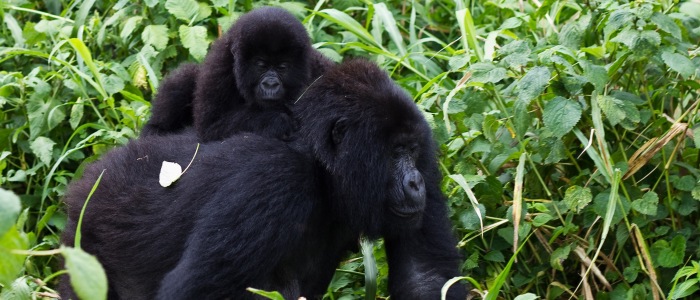
Species Richness- the quantity of species in an area


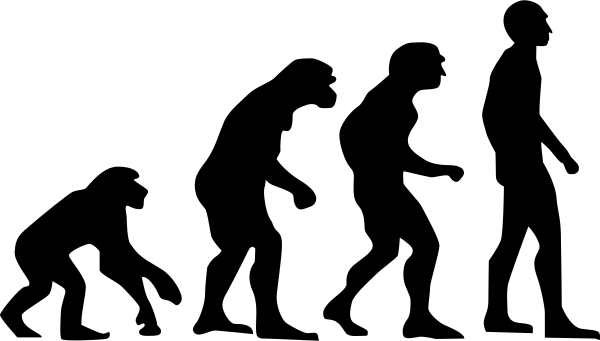
Microevolution- small change within single species

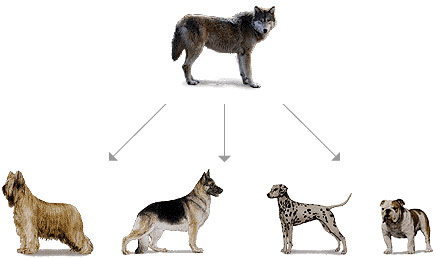
Macroevolution- big change in a species


Genetically Modified Organisms- organism that is altered genetically. Like huge tomatoes because people don't want small tomatoes


Exponential Growth Model- estimates populations future size after some time based on the current growth rate and the number of organisms that can actually mate or have offspring


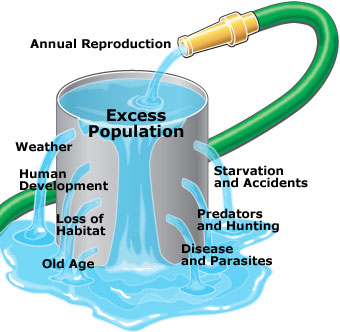
Carrying Capacity- number of organisms that can survive at the same time in an environment
Keystone Species- MVS or most valuable species in an environment. A lot species depend on that one species


 An endemic species is a species that live in specific locations around the world and nowhere else. Mainly isolated

Current Event-
What is a biodiversity hotspot and why are they important? A BH has many species that can only live there(endemic species) and are an area that is under threat from humans. It also has a lot of different species. They are important because they contain many unique species that can only live there and must conserved and must be kept safe from human threats.
Where is your hotspot located and what type of ecosystem is present there? The Tropical Andes is an area with many tropical rain forests

 An endemic species is a species that live in specific locations around the world and nowhere else. Mainly isolated
Endemic plant- Andean bromeliad. Known as the queen of the andes. Only found in 3200-4800m of elevation. Can grow up to 10 meters!
Endemic animal- Vicuña. Live in the high area of the Andes and are a relative of the llama.

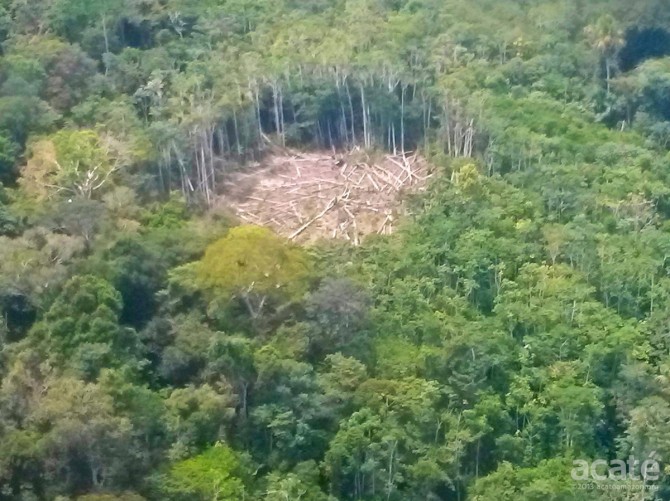
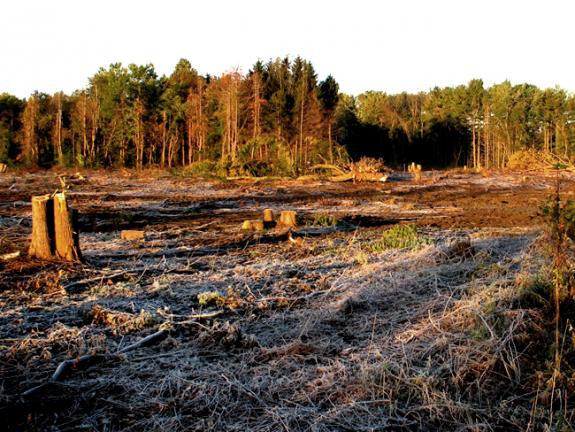
Human induced reasons and/or natural reasons for why biodiversity is decreasing- Agriculture, deforestation, dams, and road building are the most significant threats. At higher altitudes seasonal burning, grazing, agriculture, mining, and fuelwood collection. Also cultivation of opium. Oil exploration and mining also fuel the decrease in biodiversity.
Efforts being done to to protect the area- The people of the Andes are trying to reduce the effect the growing infrastructure has on the species of the andes. Laws that prohibit poaching, settlement and illegal logging have been put in place. Protecting certain areas of the Andes to keep the ecosystems in tact.
Pick-A-Side
If there was a sea with fish, kelp, and sea urchins but no sea otters than the fish in that area would become extinct. The sea-otters, a keystone species, eat the sea urchins. By eating the sea urchins they help maintain a species evenness because if there are too many sea urchins then there aren't enough kelp beds for the fish to have their little fishies. Thus no sea otters means there could be a mass extinction of that fish species. Species richness would decrease as well because there would be no fish at all. No fish in that ecosystem could also affect the predators of the fish such as bears, eagles, or if in the sea then dolphins or whales would be without fish to eat. Without fish to eat the whale or dolphin population could also decrease. Also without sea otters there would be too many sea urchins and the sea urchin ecosystem could reach its level of carrying capacity.
Human Impact- Humans have negatively impacted the environment. The Tropical Andes became a hotspot because humans wanted to expand into that zone thus destroying certain habitats of some rare species. Humans can also be the reason for many changes in some species such as allopatric speciation. A man made barrier may split a species and prevent it from mating and when it finally gets reunited it has evolved and can no longer mate with its former species.Humans are also responsible for genetically modified foods and are the reason why we can enjoy seasonal fruits in all four seasons, such as strawberries and oranges. In our lab we impact our fish by feeding him every class period.
Environmental Impact- There are many environmental impacts that shape the evolution of biodiversity. Keystone species are developed that make a community dependent on them, even if nobody notices until that species starts becoming extinct and things start changing because that keystone species isn't there anymore. The climate and altitude of the Tropical Andes region is what allows many species of plants and animals to survive there and only there. The environment is also a reason for evolution. Animals have to evolve if the environment because if they don't then they don''t survive. Survival of the fittest and the animals that can adapt the fastest survive the most. The environment is also responsible for the amount of species that can live in an environment aka the carrying capacity. If there are 100 potatoes and 500 lions and each lion needs one potato to survive then sadly 400 lions will die because only a max of 100 lions could survive in such a potatoless environment. Our lab is not affected by the environment outside because both the fish and the hermit crab are in its own ecosystem.
Economic Impact- The disappearance of a keystone species could impact the economy negatively. If sea otters disappeared then so would fish and the fishermen would have no fish and would go into a fishless recession. GMO benefit the economy though, because these organisms that are genetically modified can be grown without relying on any outside variables and would not be affected if anything changed, except if there was a shortage of the organism in the first place. If there is a shortage then the prices of the organism(food) would go up and it would cause problems in our economy. Farmers would also be impacted negatively if there was a shortage of food in their farms. In the Tropical Andes the protection of certain zones of it could stunt the growth of the infrastructure of that country as well.
Government Legislation- In our lab there is no government legislation. In the Tropical Andes there is. There are many efforts being made by the government to protect this biodiversity hotspot. Government has passed laws to prohibit settling, poaching, and illegal logging. Endemic species also have to be protected. Government legislation has also harmed the biodiversity hotspot by allowing mining and oil exploration and road building and other threats to occur in the tropical andes before making any steps towards stopping them. The government has also passed laws concerning GMOs.Laws are made to protect the people from unsafe foods that are GMOs. The FDA is in charge of this.
Human Impact- Humans have negatively impacted the environment. The Tropical Andes became a hotspot because humans wanted to expand into that zone thus destroying certain habitats of some rare species. Humans can also be the reason for many changes in some species such as allopatric speciation. A man made barrier may split a species and prevent it from mating and when it finally gets reunited it has evolved and can no longer mate with its former species.Humans are also responsible for genetically modified foods and are the reason why we can enjoy seasonal fruits in all four seasons, such as strawberries and oranges. In our lab we impact our fish by feeding him every class period.
Environmental Impact- There are many environmental impacts that shape the evolution of biodiversity. Keystone species are developed that make a community dependent on them, even if nobody notices until that species starts becoming extinct and things start changing because that keystone species isn't there anymore. The climate and altitude of the Tropical Andes region is what allows many species of plants and animals to survive there and only there. The environment is also a reason for evolution. Animals have to evolve if the environment because if they don't then they don''t survive. Survival of the fittest and the animals that can adapt the fastest survive the most. The environment is also responsible for the amount of species that can live in an environment aka the carrying capacity. If there are 100 potatoes and 500 lions and each lion needs one potato to survive then sadly 400 lions will die because only a max of 100 lions could survive in such a potatoless environment. Our lab is not affected by the environment outside because both the fish and the hermit crab are in its own ecosystem.
Economic Impact- The disappearance of a keystone species could impact the economy negatively. If sea otters disappeared then so would fish and the fishermen would have no fish and would go into a fishless recession. GMO benefit the economy though, because these organisms that are genetically modified can be grown without relying on any outside variables and would not be affected if anything changed, except if there was a shortage of the organism in the first place. If there is a shortage then the prices of the organism(food) would go up and it would cause problems in our economy. Farmers would also be impacted negatively if there was a shortage of food in their farms. In the Tropical Andes the protection of certain zones of it could stunt the growth of the infrastructure of that country as well.
Government Legislation- In our lab there is no government legislation. In the Tropical Andes there is. There are many efforts being made by the government to protect this biodiversity hotspot. Government has passed laws to prohibit settling, poaching, and illegal logging. Endemic species also have to be protected. Government legislation has also harmed the biodiversity hotspot by allowing mining and oil exploration and road building and other threats to occur in the tropical andes before making any steps towards stopping them. The government has also passed laws concerning GMOs.Laws are made to protect the people from unsafe foods that are GMOs. The FDA is in charge of this.